
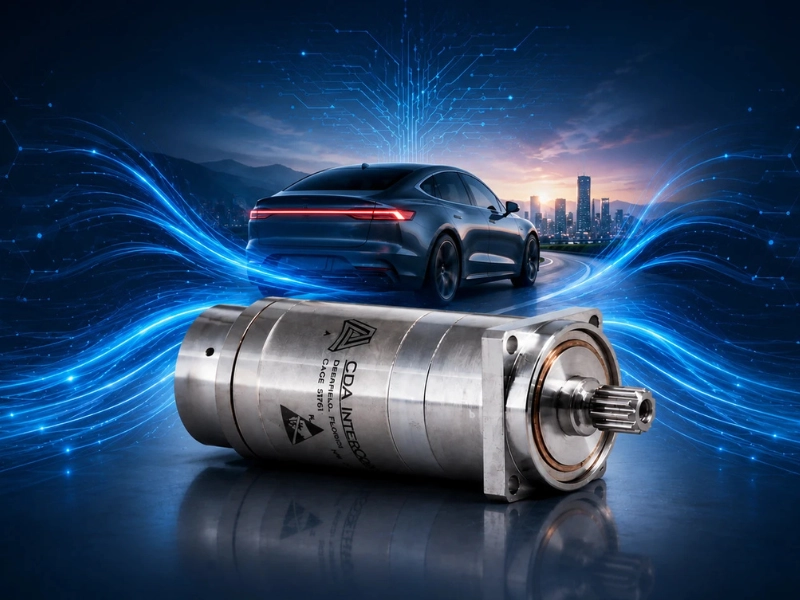
The rapid growth of electric mobility is transforming the automotive industry, creating an increasing demand for motors that deliver exceptional efficiency, reliability, and performance. A brushless DC motor for electric vehicle applications has become the preferred choice for manufacturers due to its ability to provide high power output, precise control, and longer operational life.
At the heart of this evolution is the high torque brushless electric motor, which enables electric vehicles (EVs) to achieve faster acceleration, improved energy efficiency, and extended driving range.
As EV technology advances, motor manufacturers continue to innovate, developing compact, lightweight, and high-performance solutions capable of meeting the demands of passenger vehicles, commercial fleets, autonomous platforms, and emerging electric aircraft.
Why Brushless DC Motors Are Ideal for Electric Vehicles
Unlike conventional brushed motors, brushless DC (BLDC) motors eliminate mechanical brushes and commutators, reducing friction and minimizing wear. This design improves efficiency while significantly lowering maintenance requirements.
A brushless DC motor for electric vehicle applications offers several advantages:
- High efficiency with lower energy losses
- Excellent torque-to-weight ratio
- Reduced maintenance requirements
- Longer service life
- Quiet operation
- Precise speed and position control
These characteristics make Brushless DC Motors particularly well suited for modern electric vehicles, where every percentage of efficiency contributes to increased battery range.
The Importance of High Torque in EV Performance
Torque is one of the most important factors influencing electric vehicle performance. Unlike internal combustion engines, electric motors deliver maximum torque almost instantly.
A high torque brushless electric motor enables:
- Faster acceleration
- Better hill-climbing capability
- Higher towing performance
- Improved responsiveness
- Enhanced driving experience
High torque density also allows manufacturers to design smaller and lighter powertrains without compromising performance, helping reduce vehicle weight and improve overall efficiency.
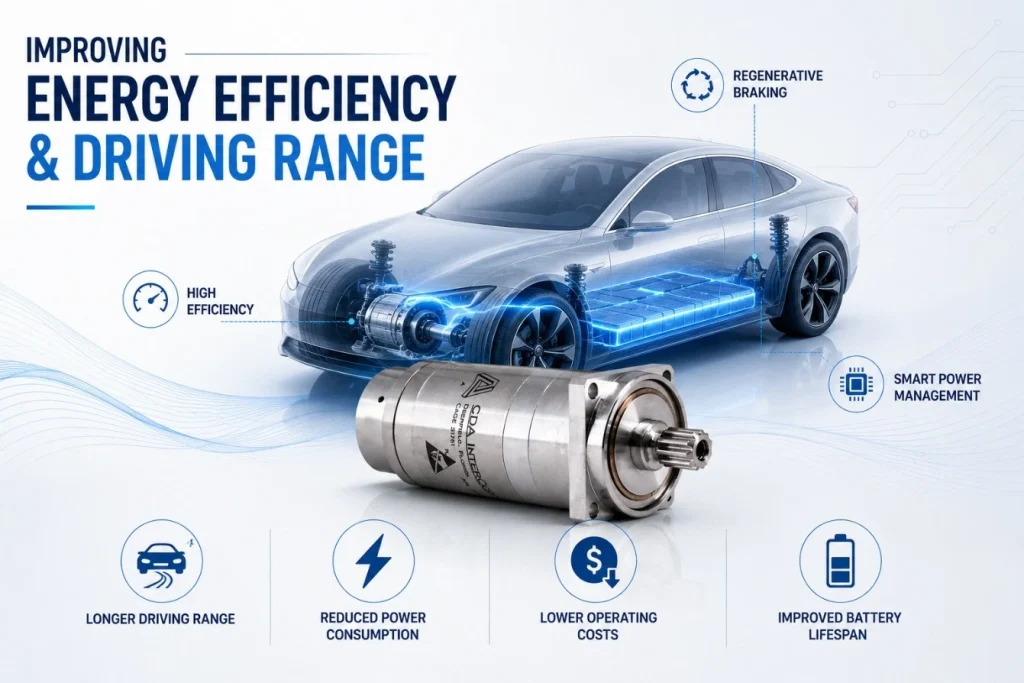
Improving Energy Efficiency and Driving Range
Battery technology often receives the most attention in EV development, but motor efficiency is equally critical.
Modern brushless DC motor for electric vehicle systems converts electrical energy into mechanical power with minimal losses. Combined with advanced motor controllers, regenerative braking, and intelligent power management, these motors help maximize battery utilization.
Benefits include:
- Longer driving range
- Reduced power consumption
- Lower operating costs
- Improved battery lifespan
As consumers continue to demand vehicles capable of travelling greater distances between charges, highly efficient motor technologies will remain essential.
Thermal Management for Reliable Performance
High-performance electric motors generate heat during continuous operation. Effective thermal management is therefore crucial for maintaining efficiency and reliability.
Today’s high torque brushless electric motor designs incorporate:
- Advanced cooling systems
- High-temperature insulation materials
- Optimized winding configurations
- Precision magnetic circuit design
These innovations enable motors to deliver consistent performance under demanding operating conditions while extending service life.
Beyond Passenger EVs: Expanding Applications
The benefits of brushless DC motors extend far beyond passenger vehicles.
Today, high torque BLDC motors are powering innovations across multiple industries, including:
- Electric buses
- Commercial delivery vehicles
- Industrial automation
- Robotics
- Autonomous vehicles
- Marine propulsion
- Unmanned aerial systems
- Electric Vertical Take-Off and Landing (eVTOL) aircraft
The aerospace sector, in particular, demands compact, lightweight motors capable of delivering exceptional reliability under challenging environmental conditions.
CDA InterCorp’s expertise in precision motor design supports industries requiring dependable, high-performance motion solutions for mission-critical applications.
Smart Motor Technologies Are Driving the Future
The next generation of electric vehicles will rely on intelligent motor systems that integrate advanced electronics and real-time monitoring capabilities.
Emerging innovations include:
- Integrated motor controllers
- Predictive maintenance technologies
- Digital diagnostics
- Advanced sensor integration
- Improved magnetic materials
- Higher power density designs
These technologies improve reliability while reducing maintenance costs and maximizing operational efficiency.
Manufacturers are also exploring new lightweight materials and optimized electromagnetic designs to achieve even greater torque density without increasing motor size.
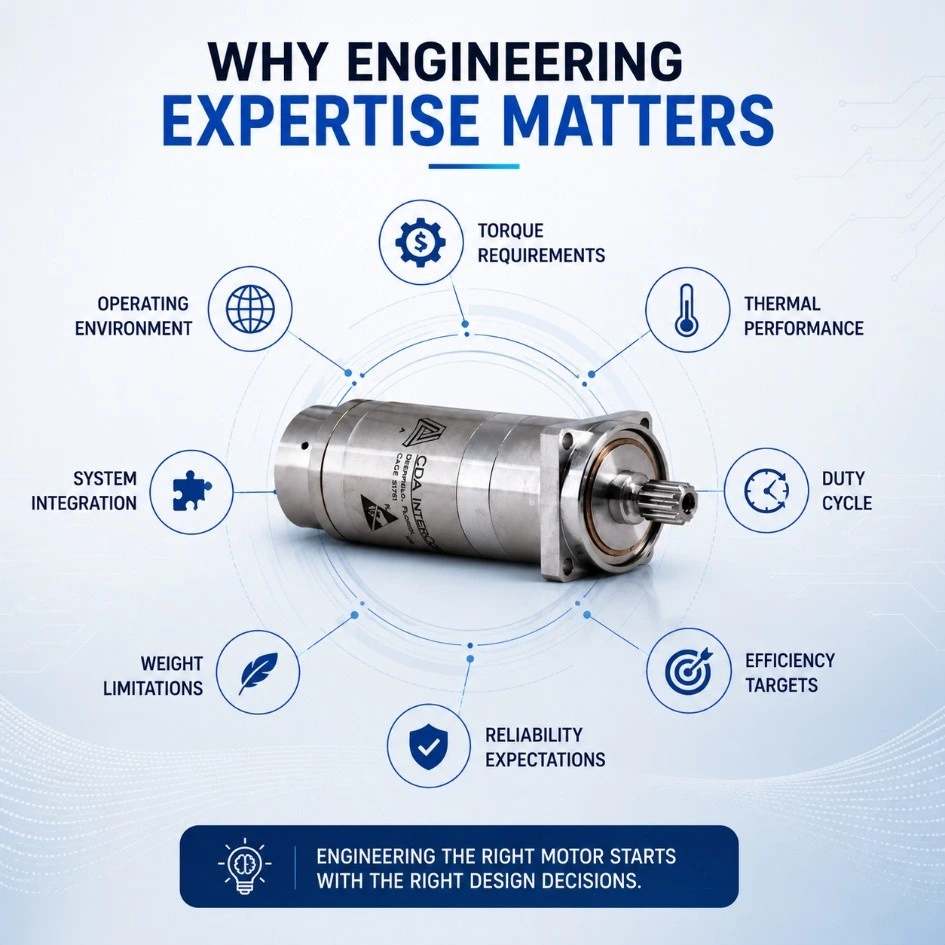
Why Engineering Expertise Matters
Selecting the right motor involves much more than choosing a power rating. Engineers must consider:
- Torque requirements
- Operating environment
- Thermal performance
- Duty cycle
- Efficiency targets
- Reliability expectations
- Weight limitations
- System integration
Organizations with decades of experience in precision motion technologies are better positioned to develop customized solutions that meet demanding application requirements.
CDA InterCorp specializes in designing precision motors and motion-control solutions for aerospace, defense, industrial automation, and other high-performance industries where reliability and precision are critical.
Conclusion
As electric mobility continues to evolve, the brushless DC motor for electric vehicle applications will remain a key enabler of higher efficiency, longer driving range, and superior vehicle performance. At the same time, the high torque brushless electric motor is setting new standards for power density, reliability, and precision across transportation, aerospace, and industrial sectors.
With continuous advancements in motor design, thermal management, and intelligent control systems, high-performance brushless DC motors will play a pivotal role in shaping the future of sustainable mobility.
Frequently Asked Questions
1. Why is a brushless DC motor preferred for electric vehicles?
Brushless DC motors offer higher efficiency, lower maintenance, longer service life, quieter operation, and excellent torque characteristics, making them ideal for electric vehicle applications.
2. What is a high torque brushless electric motor?
A high torque brushless electric motor is designed to produce greater rotational force while maintaining high efficiency and compact dimensions, making it suitable for demanding applications such as EVs, robotics, and aerospace systems.
3. How do brushless DC motors improve EV driving range?
Their high efficiency reduces energy losses during operation, allowing batteries to deliver more usable power and helping extend the vehicle's driving range.
4. Where are high torque brushless electric motors used besides electric vehicles?
They are widely used in aerospace, industrial automation, robotics, medical equipment, autonomous systems, marine applications, and eVTOL aircraft.
5. What factors should engineers consider when selecting a brushless DC motor?
Important considerations include torque requirements, efficiency, thermal performance, speed range, operating environment, reliability, power density, and system integration requirements.